«When Maria saw an announcement in a group for internally displaced people about the opportunity to attend the «DACHA» camp free of charge, she did not even know whether they would be able to get a place. «I was so excited! I thought, “Well, I’ll call, and then we’ll see if we’re lucky.” And when they called me back and said we could come, I was so happy. It was like my… I don’t know… lottery ticket. A chance to reset, come to my senses during these two weeks, and then keep going».
The family moved to Pereiaslav only at the beginning of June. Before that, they had lived in Kramatorsk for many years. Their whole familiar life remained there. The decision to leave was one of the hardest they had ever made. «We thought about it for a long time. We have an apartment there, we recently renovated it, our friends are there, our belongings… But unfortunately, Kramatorsk has been shelled very often lately. Sometimes there are up to 25 attacks a day. So we finally decided to move. Fortunately, I didn’t lose my job because I work remotely».
They left on their own, without taking part in any evacuation programs. Maria travelled with her retired mother, her 16-year-old son Dmytro and… their cat Nika. «I didn’t take any unnecessary things because I knew the cat would be coming with me. Bowls, her little bed… We couldn’t leave our pet behind», she says with a smile.
Sleepless nights and the constant expectation of danger affected Dmytro in particular. For six years, he played football at the Avanhard academy in Kramatorsk. After the beginning of the full-scale war, training initially moved online and later stopped altogether. One by one, his friends began leaving the city.
«He was left alone in his room. Then his friends started moving to different cities, and he completely withdrew into himself. He used to be very friendly and was always involved in everything, but now… we still haven’t been able to draw him out».
That is why, when Maria learned about the camp, she was thinking about both herself and her son. «I said, “Oh, this is our new life!” I want to recover somehow, make new friends, communicate with people. And I really wanted Dmytro to do that too…»
According to Maria, the activities where parents and children worked together made the strongest impression on her.
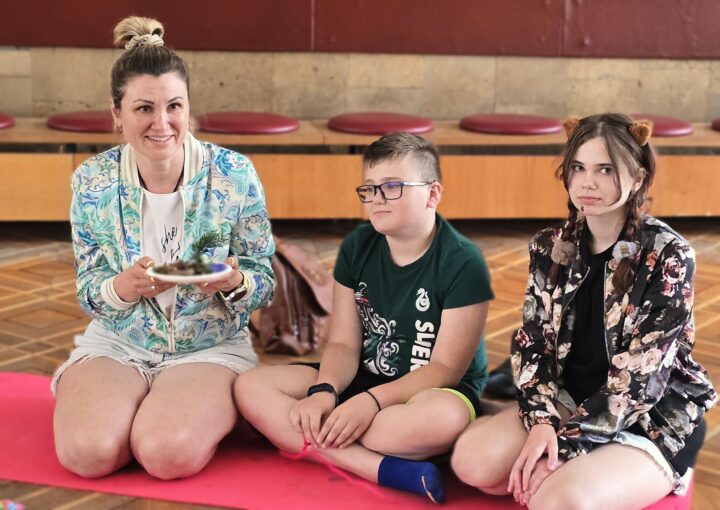
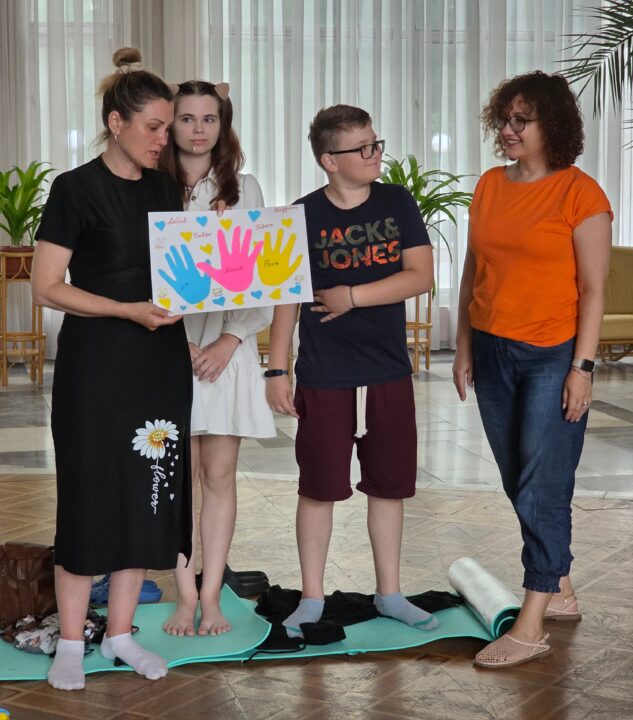
One day, participants created their own «island of calm». They had to find natural materials and use them to make a composition. «And Dmytro came up with the first project himself right away! You know, they gave us a little white plate, a disposable one, and said: you have 10 minutes, go and collect your materials. Dmytro said, “I saw some sand over there. Mom, let’s bring the sand here. This will be our island of calm.” We collected pine cones, twigs, flowers… And we made everything together. It was so easy, so harmonious».
Another time, they built a symbolic bridge representing their family.
«I said, “Let’s do it this way: I’ll say one word, then you say one word.” And together we created this bridge. I’ve already prepared a bag to take all our work home. It will remind us of how we were together, how we worked together, and all the positive emotions we experienced here. You know, our strength is in unity».
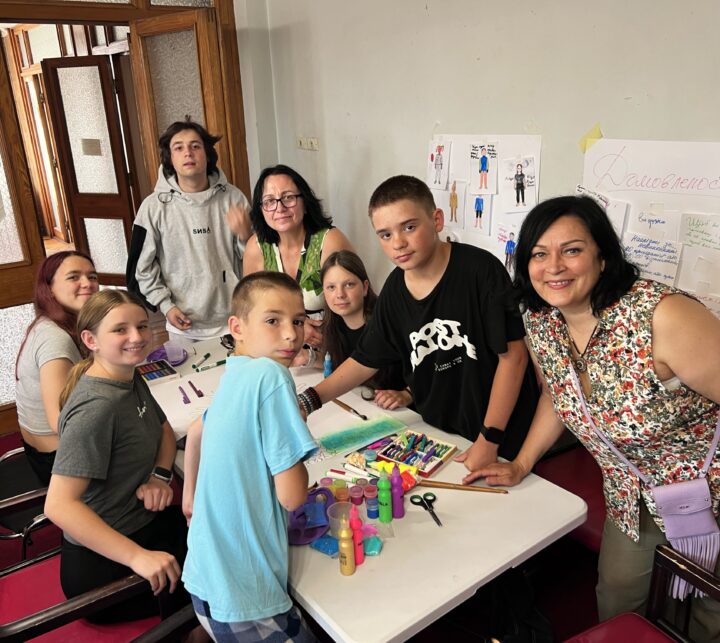
Maria admits that she had not allowed herself to simply draw, sculpt or make something with her hands for a long time. «Everything here is well thought out. First, the children are separate, the adults are separate, and then we come together and make something together. We haven’t sculpted, painted or done any crafts for such a long time. And here it’s just like being a child again!»
The sessions with psychologists became another important source of support. «Here I managed to let out what had built up inside me. To talk through all of it. Now I realize that my thoughts are brighter. I no longer feel that same burden or anxiety about what to do next».
After moving to a new city, the family did not know anyone. At the camp, however, they began making their first new connections. «We’ve already exchanged phone numbers here. One woman said, “That’s it, girls, we’re going to meet up.” And I thought, how wonderful. Because we don’t have anyone in Pereiaslav».
By the end of the conversation, Maria is no longer talking about the war, but about the future. «I am very grateful for this project. You can’t imagine how much I have truly reset and recovered. These two weeks have inspired me so much to keep living. To accept this reality and simply move forward».
Dmytro himself does not say much. When asked about himself, his answer is brief:
— What do you like most?
— «I like playing football… that’s all», he says with a smile.
But when the conversation turns to the camp, he becomes more talkative, describing sports games, volleyball, football, outdoor activities and sessions with psychologists. During one of the creative activities, he drew a house and flowers, while among the psychological practices, he remembers the breathing exercises most clearly.
Despite the positive changes in his mood that she has already noticed at the camp, Maria understands that her son needs individual sessions with a psychologist for a fuller recovery—the stress he experienced was too intense.
Perhaps the most important thing happened neither during the interview nor in a psychological group session. It happened when a mother and son started doing things together again: collecting pine cones for their «island of calm», building a symbolic bridge, and gradually opening a new chapter in their lives.
«Integrated support for war-affected children, families and communities» Project is funded by the European Union and implemented by the Solidarity Fund PL in Ukraine in frames of PRO_MentalHealth Psychosocial Support Programme.